කොන්ක්රීට් ස්ලැබ් එක දාන්න කලින් සහ දැමීමෙන් පසු සැලකිලිමත් විය යුතු කරුණු (Concrete Slab Casting Checklist)
Guide to a Strong Upper Floor
Casting a concrete slab (කොන්ක්රීට් ස්ලැබ්) is one of the most significant milestones in residential home construction. It seals your ground floor and provides the structural floor base for upper levels or roof terraces.
Because a concrete slab carries massive dead and live loads, any mistake during preparation, pouring, or post-casting curing can lead to structural sagging, micro-cracks, water leakage, or long-term strength loss.
In this guide, we cover the crucial engineering steps before and after pouring a concrete slab, as presented by
1. Important Steps Before Casting the Slab (ස්ලැබ් එක දාන්න කලින්)
Thorough preparation guarantees that the slab is level, watertight, and structurally sound.
A. Formwork & Shuttering (සැටලිම් සූදානම් කිරීම)
-
Prop Support: Ensure all vertical props (jack posts or scaffolding poles) are planted on a solid base to prevent sinking under wet concrete weight.
-
Sealing Gaps: All joints between plywood sheets or steel formwork panels must be sealed tight to prevent cement slurry (පෙන/කිරි වතුර) from leaking. Slurry leakage leaves porous honeycombs in the slab soffit.
-
Leveling Check: The entire shuttering bed must be verified using water levels or optical survey instruments to prevent uneven slab thickness.
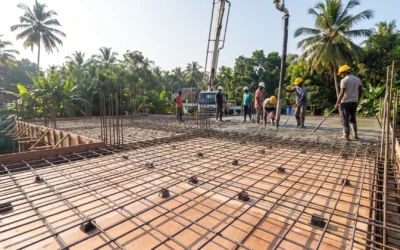
B. Steel Reinforcement Layout (කම්බි එලීම)
-
Bar Bending & Spacing: Main rebars, distribution bars, and crank bars (extra top steel at supports) must be tied with binding wire exactly according to structural engineering drawings.
-
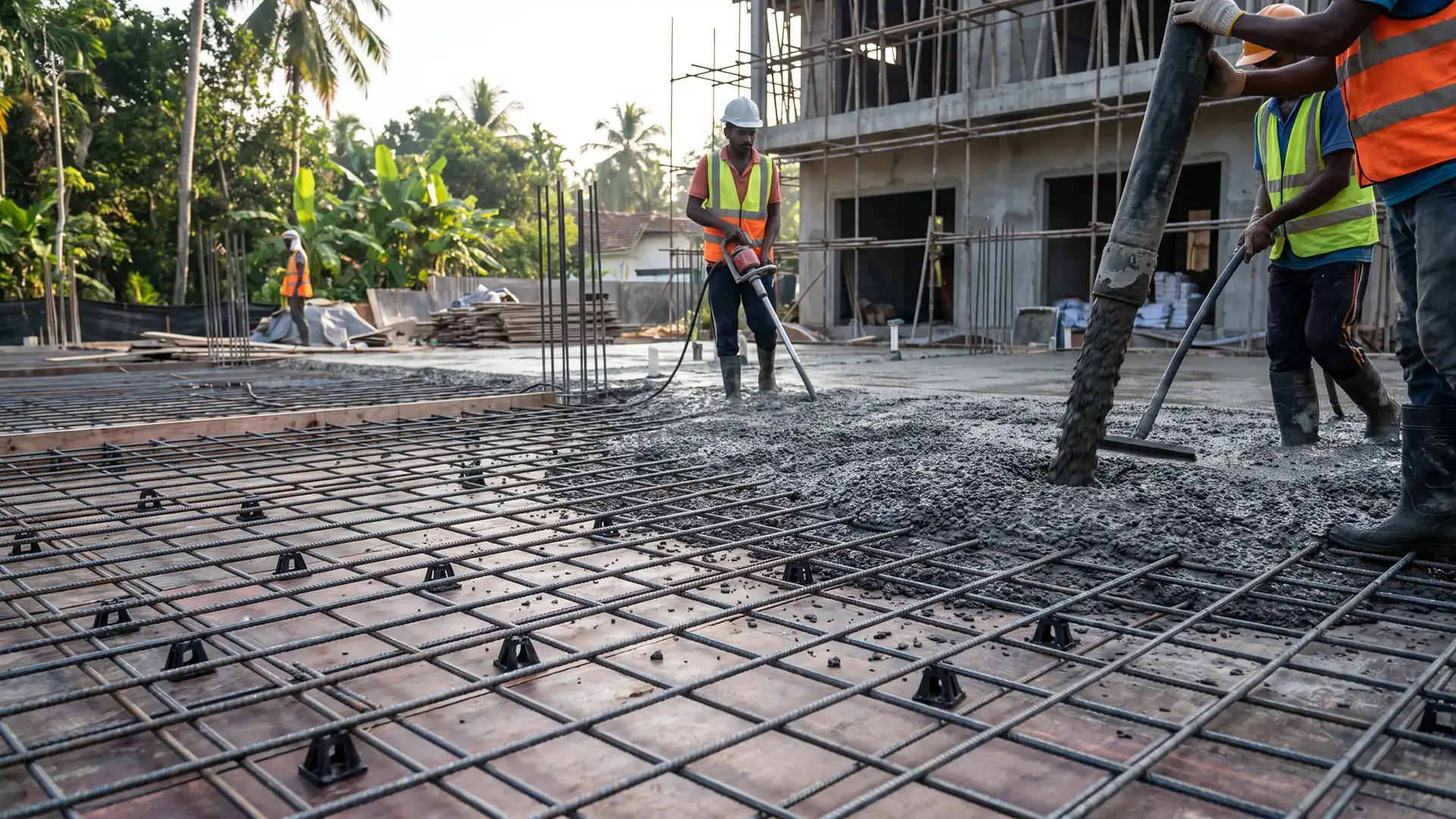
Cover Blocks: Place concrete cover blocks (typically 20mm–25mm) beneath the bottom steel grid to ensure complete concrete coverage around the steel bars.
-
Electrical & Plumbing Conduits: Install all electrical floor junction boxes, PVC conduit pipes, and plumbing drain outlets before pouring concrete. Ensure conduits do not bunch together to avoid creating structural shear planes.
2. Precautions During Concrete Pouring (කොන්ක්රීට් දාන අතරතුර)
-
Concrete Mix Ratio: Use the engineered design mix (commonly Grade 25 concrete) with the correct water-cement ratio.
-
Mechanical Vibration: Use a mechanical needle vibrator to compact the concrete thoroughly around dense steel grids without over-vibrating (which causes segregation of aggregates).
-
Workability: Avoid adding extra water at the site to make the mix easier to handle, as this drastically reduces final concrete compressive strength.
3. Crucial Steps After Casting the Slab (ස්ලැබ් එක දැමීමෙන් පසු)
The quality of your finished slab depends heavily on what happens immediately after the pour.
A. Surface Finishing & Levelling
-
Screed and float the top surface evenly to establish correct slopes toward drain points if the slab will serve as an open roof terrace.
B. Proper Water Curing (වතුර දැමීම)
-
Ponding Method: Create small mortar or sand dikes (පොකුණු) across the slab surface and keep them filled with water continuous for at least 7 to 14 days.
-
Why Curing Matters: Concrete gains strength through a chemical reaction called hydration. If the surface dries too quickly under the sun, shrinkage cracks will form, leading to ceiling water leaks.
Watch the Full Step-by-Step Concrete Slab Video
Want to see all these pre-casting and post-casting checks in real-time on an active Sri Lankan construction site? Watch Episode 12 of the Lions Home Lanka House Construction Series on YouTube:
▶️
Build Your Dream Home with Lions Home Lanka
With over 30 years of continuous construction expertise, Lions Home Lanka ensures that every critical phase—from foundation to slab casting—is executed with absolute structural precision.
Partner with us for safe, durable, and beautifully crafted homes in Sri Lanka!
📞 Contact Us:
-
Office Address: No.576/1, Kadawatha, Sri Lanka.
-
Phone / WhatsApp:
+94 72 7 637 500 +94 77 7 637 500 -
Email:
info@lionshome.lk -
Official Website:
Lions Home Lanka